Cell & Developmental Biology of Xenopus:
Gene Discovery & Disease
April 6 - 20, 2027
Key Dates
Application Deadline: December 16, 2026
Arrival: April 6, 2027 by 6 pm EST
Departure: April 20, 2027 around 12 pm EST
CSHL Courses are intensive, running all day and often including evenings and weekends; students are expected to attend all sessions and reside on campus for the duration of the course.
The programs are not offered for academic credit or completion of an academic program of study in the U.S.
InstructorsRachel Miller, UTHealth Houston, McGovern Medical School
Peter Walentek Universitätsklinikum Freiburg, Germany
See the roll of honor - who's taken the course in the past.
Follow us on Twitter: @cshlxeno
Check out highlights from the 2024 Xenopus Course!
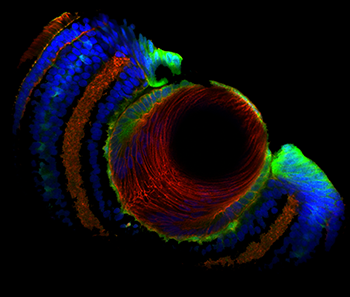 Xenopus Laevis Eye - Lennart Gollenbeck
 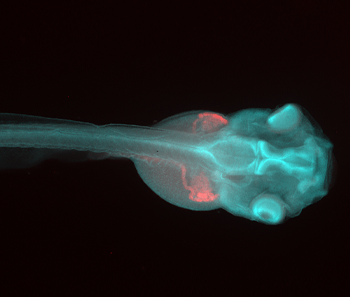 HCR Kidneys - Shiri Kult Perry
 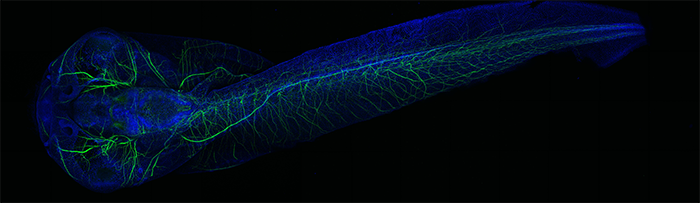 Xenopus Laevis Whole Tadpole - Christina Roca
|
|
| Xenopus Laevis Eye - Lennart Gollenbeck |
HCR Kidneys - Shiri Kult Perry |
Xenopus Laevis Whole Tadpole - Christina Roca
In vivo animal models are an important tool for the understanding of human development and disease. Studies using the frog Xenopus have made remarkable contributions to our understanding of fundamental processes such as cell cycle regulation, transcription, translation and many other topics. Xenopus is remarkable for studying development and disease, including birth defects, cancer, and stem cell biology. Because Xenopus are easy to raise, producing many thousands of eggs per day, these frogs have emerged as a premiere model for understanding of human biology from the fundamental building blocks to the whole organism.
Topics for 2027:
Gene manipulation
- CRISPR/Cas9 knock-out
- Antisense Morpholino knock-down
- mRNA and DNA over-expression
- Small molecule drug treatment
- Transgenesis
Experimental Techniques
- Targeted microinjections
- Tissue transplantation
- Organoid generation
- Dissections and ex vivo organ culture
- Biomechanics
- Single cell technologies
Analysis Methods
- Immuno-fluorescence and labeling
- mRNA in situ hybridization and hybridization chain reaction (HCR)
- Bioinformatics and imaging analysis
- High-resolution confocal, spinning-disc and 2-photon microscopy
- Time-lapse and live-cell imaging
- Plate-based imaging and optical coherence tomography
Xenopus Resources
Due to the tailored nature of this course, it is suitable for those new to the Xenopus field, as well as for more advanced students who are interested in emerging technologies. Please feel free to contact the instructors for informal guidance.
Prior Year Invited Speakers
Chenbei Chang, University of Alabama at Birmingham, Birmingham, AL
Nicole Edwards, Cincinnati Children's Hospital, Cincinnati, OH
Kerstin Feistel, University of Hohenheim, Stuttgart, Germany
Douglas Houston, The University of Iowa, Iowa City, IA
Taejoon Kwon, UNIST, Ulsan, Korea
Soeren Lienkamp, University of Zurich, Zurich, Switzerland
Roberto Mayor, University College London, London, United Kingdom
Jacques Robert, University of Rochester Medical Center, Rochester, NY
Jakub Sedzinski, University of Copenhagen, Copenhagen N, TX
Kelly Tseng, University of Nevada Las Vegas, Las Vegas, NV
John Young, Simmons University, Boston, MA*
Coral Zhou, University of Kansas, Lawrence, KS
Axolotl Neurulation - Nayeli Reyes-Nava
SUM memGFP St16 CNC Explant - Lara Busby
Neural Tube Closure - Lorena Agostini Maia
Support & Stipends:
Support & Stipends:
Major support provided by the National Institute of Child Health and Human Development.
Stipends are available to offset tuition costs as follows:
Please indicate your eligibility for funding in your stipend request submitted when you apply to the course. Stipend requests do not affect selection decisions made by the instructors.
We would like to acknowledge the following companies that provide invaluable support:
Biolyst Scientific, BioVision Technologies, Bruker, KEYENCE, Leica Microsystems, Molecular Devices, Narishige, Nikon Instruments, Sutter Instrument, Thorlabs, Xenopus 1, Corp., Zeiss Microscopy
Bitplane software licenses provided by:
Andor / Imaris
Many thanks to the CSHL Microscopy Shared Resource and its Director Erika Wee for significant contributions to the success of the course.
Cost (including board and lodging): $4,935 USD
No fees are due until you have completed the full application process and are accepted into the course.
Before applying, ensure you have (all due by December 16, 2026):
- Personal statement/essay;
- Two Letters of recommendation (required);
- Curriculum vitae/resume (required);
- Financial aid request (optional). Stipend requests do not affect selection decisions by the Instructors.
More details.
If you are not ready to fully apply but wish to express interest in applying, receive a reminder two weeks prior to the deadline, and tell us about your financial aid requirements, click below: